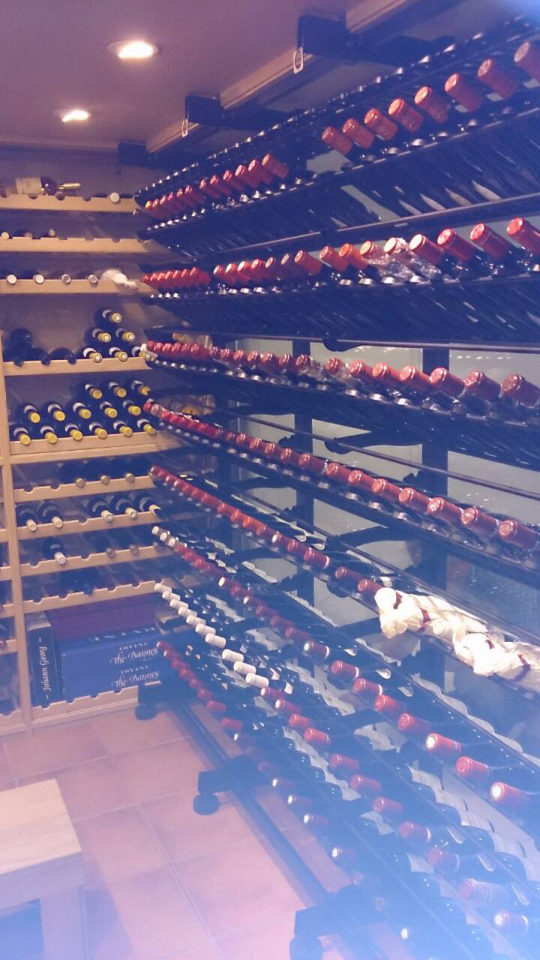
Service & Projects

Whoever sells the equipment
should be able to fix it.

Cellar design and construction, cabinet repair, bespoke timber cladding — we do this work ourselves rather than subcontracting it to trades unfamiliar with wine storage.

Describe the situation
Repair

Cabinet repair,
wherever you bought it

The hard part of a broken wine cabinet is rarely the repair. It is finding anyone willing to look at it — particularly grey-market units, discontinued models, or machines the manufacturer stopped supporting years ago.

We repair wine cabinets of every brand, regardless of where they were originally purchased. We diagnose the symptom, then tell you whether it is worth repairing and roughly how much longer the unit will last — rather than defaulting to “buy a new one”.

  • Not cooling, insufficient cooling, temperature drifting
  • Compressor noise, running without cycling off
  • Perished door seals, condensation, frost
  • Control board failure, display faults
  • Warped timber shelving, damaged runners
  • Discontinued models, grey imports, machines the factory no longer services

We confirm the likely fault and the cost range with you before starting. No mid-job additions.

Describe the fault
We work out whether it is worth repairing and how much life is left in it, rather than defaulting to a replacement.
Wine Cellar

From a room
to a cellar

A cellar is not primarily about how it looks. It is about whether it can hold wine properly for years.

We handle the whole thing: survey, insulation and vapour control, selection of climate equipment, storage capacity, circulation and lighting.

Survey

Measure the space, confirm power supply and drainage.

Design

Capacity and equipment specified to the collection and the budget.

Insulation and vapour control

Get this wrong and every piece of equipment afterwards is wasted effort.

Construction

Climate unit, racking, joinery and lighting integrated.

Aftercare

Handover is not the end. Maintenance stays with us.
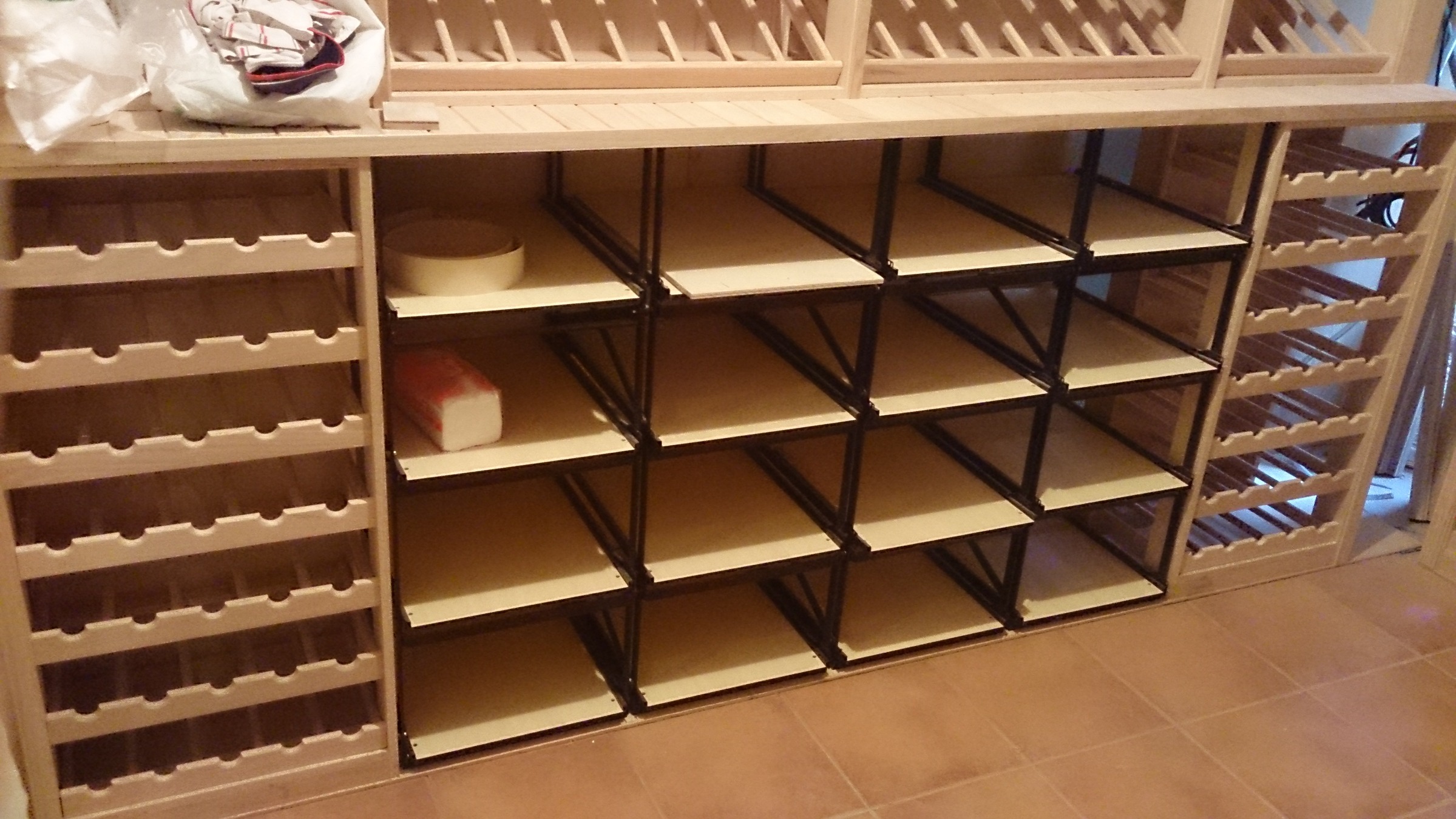
Timber wine cellar racking under construction, with bin shelving and pull-out trays
Cellar racking under construction. Shelving is configured to the number of bottles and how they are accessed, with clearance retained for equipment.
Joinery

Making a cabinet
look less like
an appliance

A professional wine cabinet dropped into a living or dining room rarely sits well with the rest of the interior.

Bespoke timber cladding: a surround made to the dimensions of the machine and the language of the room, so the cabinet reads as joinery rather than equipment — while retaining the ventilation clearance the unit needs. Many interior contractors overlook that clearance, and it directly shortens the life of the cabinet.

Hinoki mortise-and-tenon dining tables: built with traditional joinery rather than metal fixings, so the structure settles and strengthens over time, and the grain and scent develop with use.

Enquire about joinery
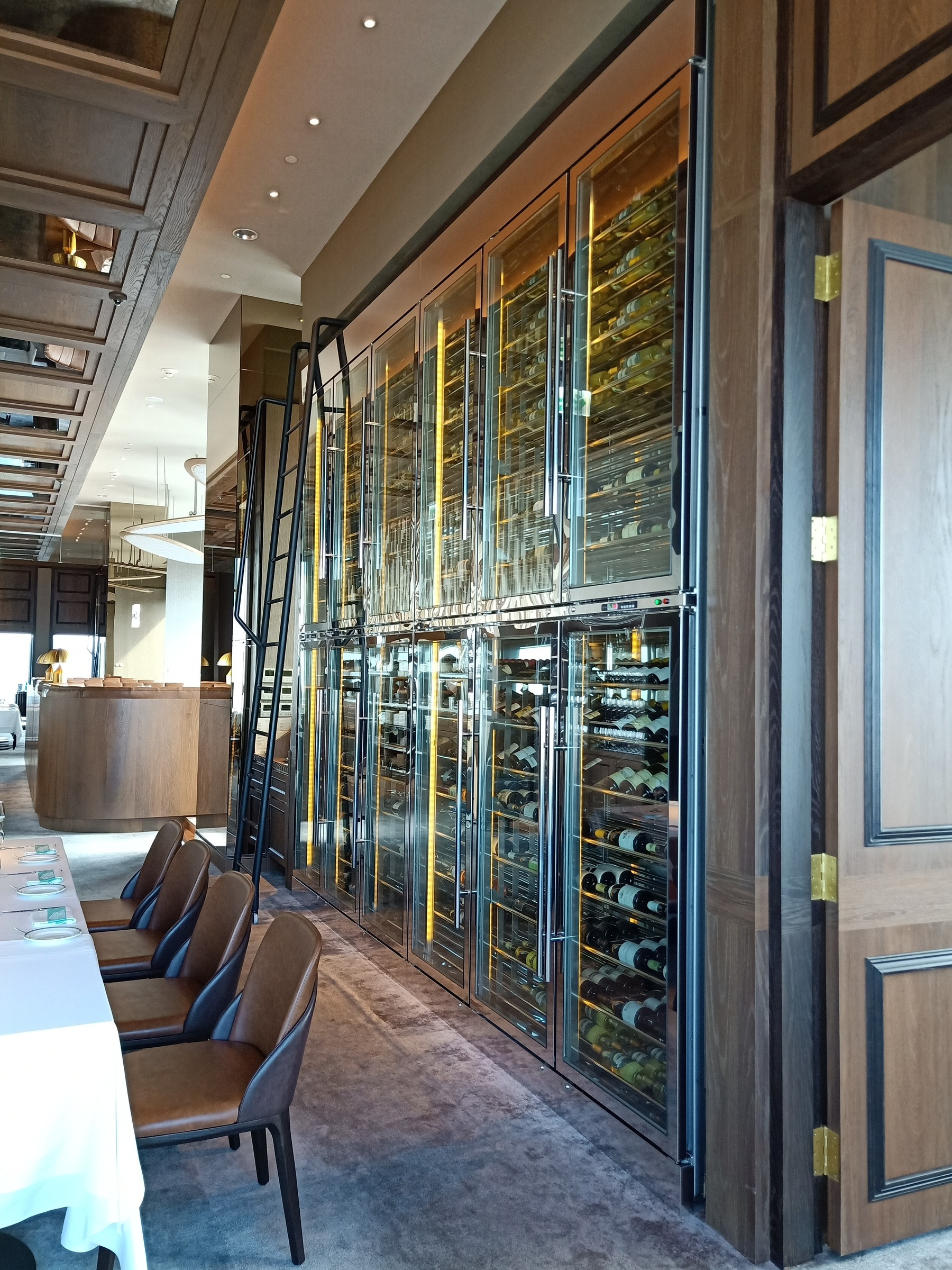
Full-height built-in wine cabinet wall in a restaurant, with rolling library ladder
A full wine wall in a commercial dining room. Cladding and built-in installation make the equipment part of the architecture.
Selected Works

Recent projects

Restaurants, hotels, private residential cellars and commercial installations. A selection below, spanning the site work through to completion.

Case study: a restaurant cellar in TaichungCase Study

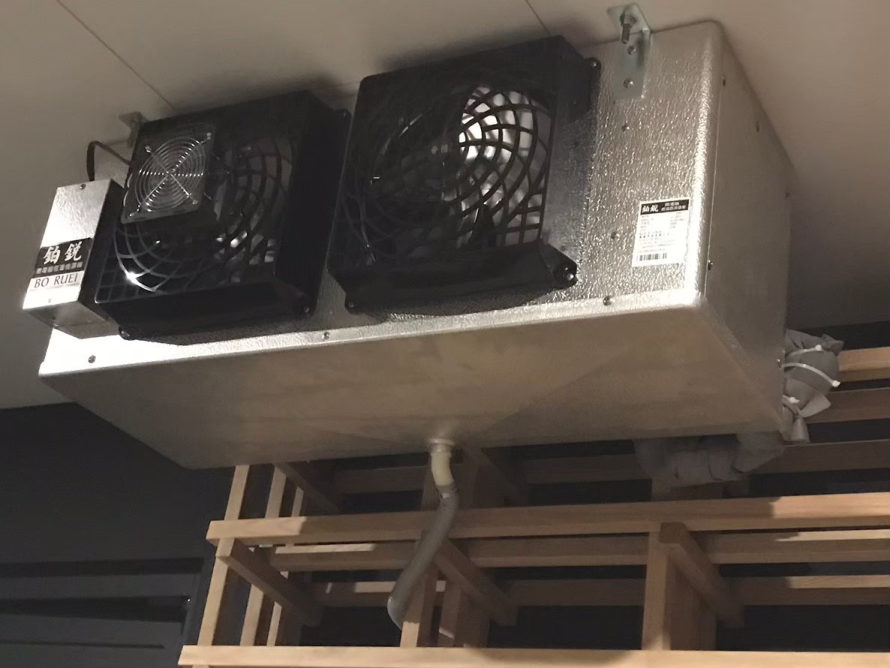
A bespoke cellar built within a working restaurant — exterior condenser, insulated shell, ceiling evaporator, humidity and temperature control, and timber racking on three walls, all planned and built by us. The four photographs below follow the key stages.
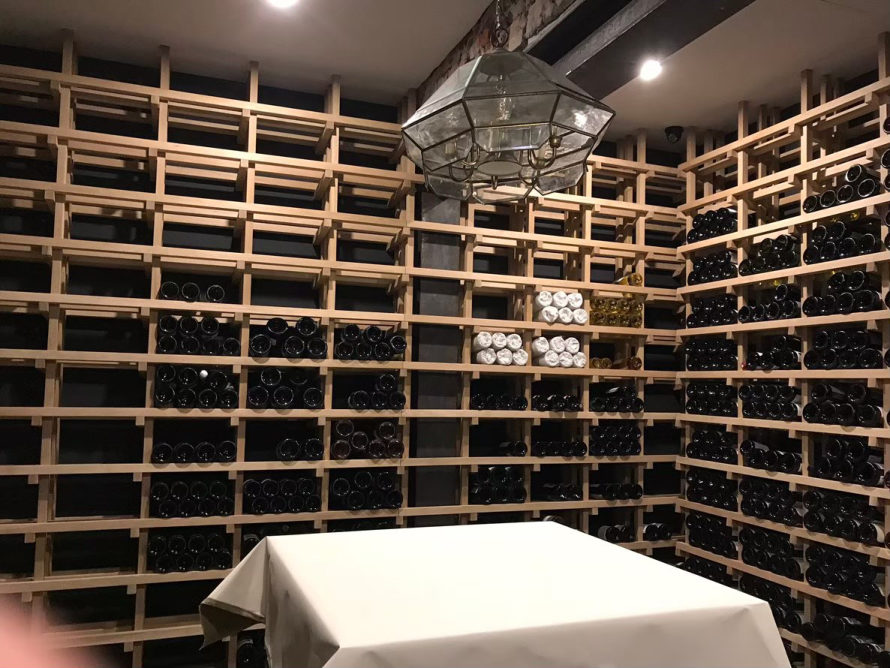
The finished cellar room
The finished cellar roomTimber racking on three walls with room for a single table at the centre. This cellar is not only storage; it is the most private table in the restaurant.
Ceiling-mounted evaporator
Ceiling-mounted evaporatorCold air is distributed evenly from above, avoiding cold spots. The unit position and drainage have to be settled before joinery begins; afterwards there is almost no room to adjust.
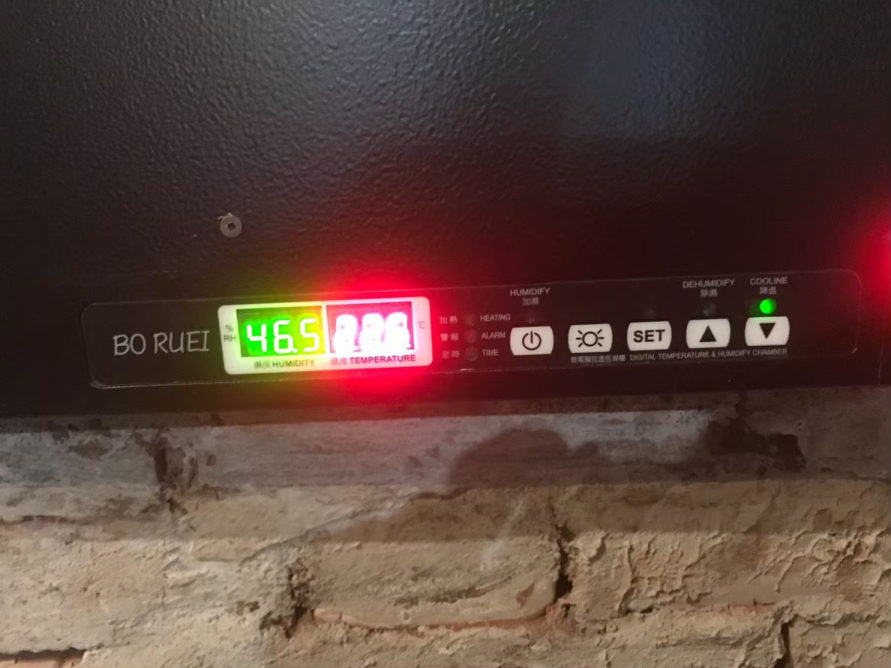
Temperature and humidity control
Temperature and humidity controlThe panel shows live humidity and temperature. A cellar is not a refrigerator: let humidity fall below 50% and the cork dries, shrinks, and lets air in.
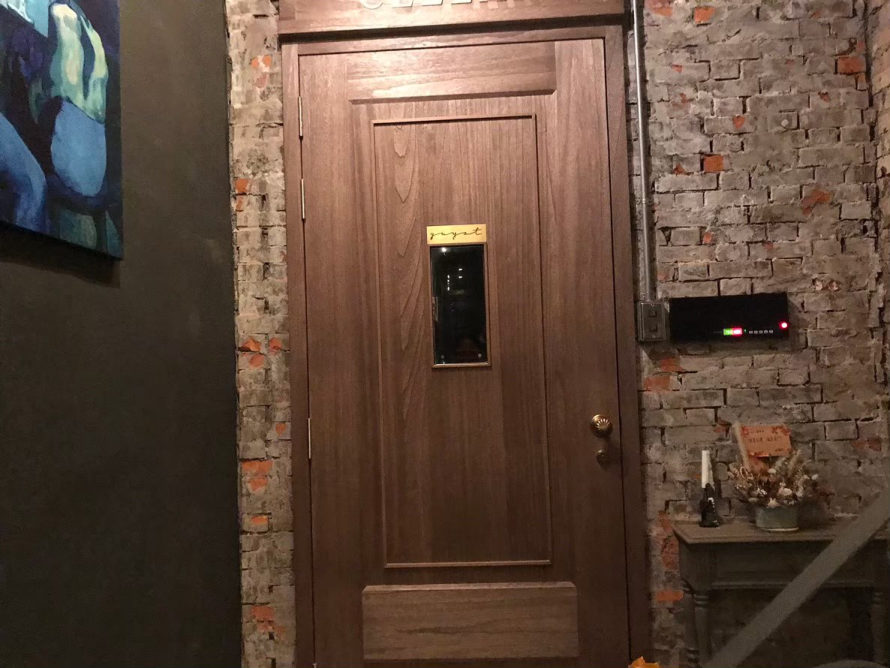
The cellar entrance
The cellar entranceA solid timber door set into brick, with sealed framing. The door is the weakest link in a cellar's insulation; get the seal wrong and every other measure is cancelled out.

Other workSelected

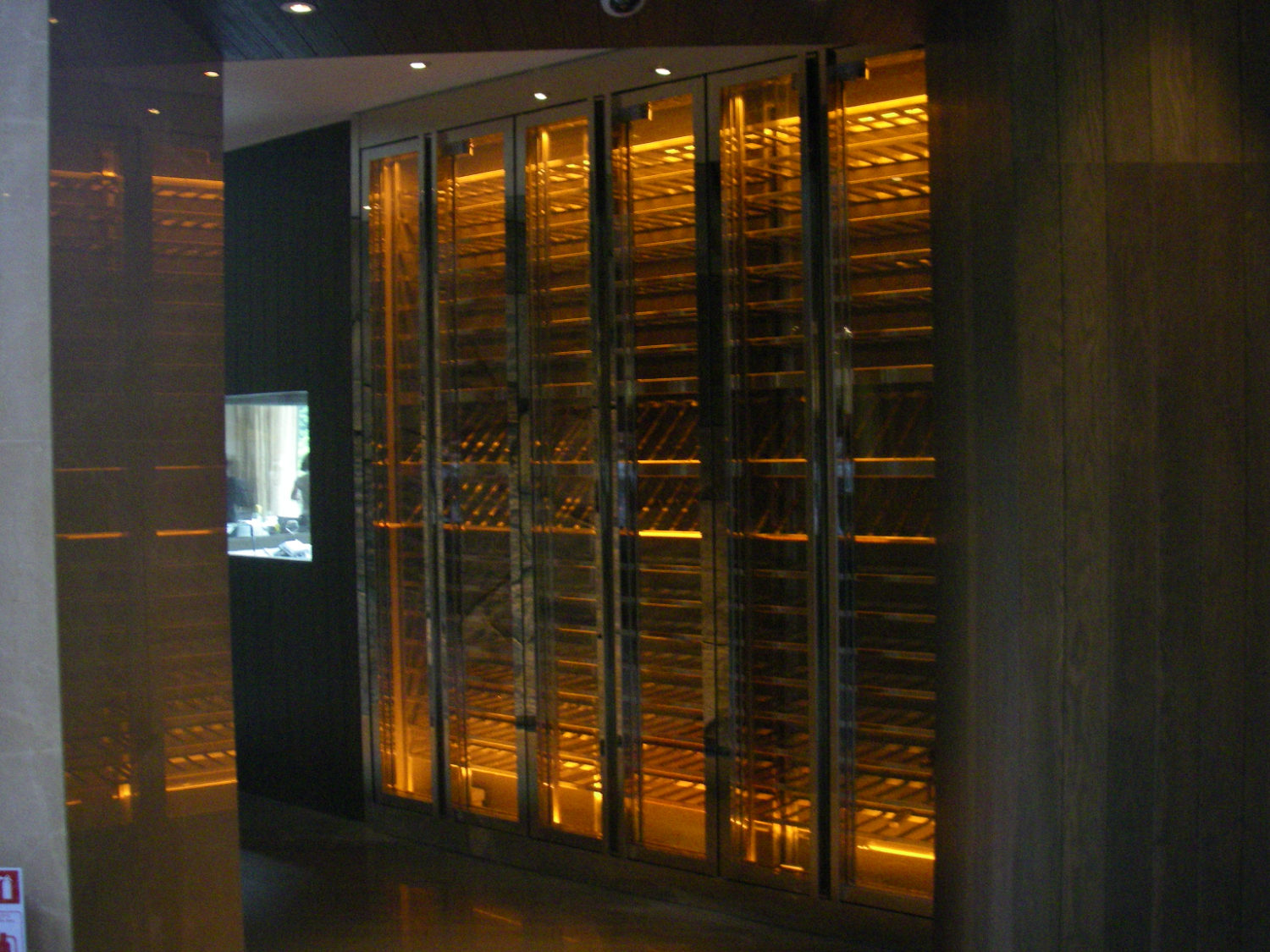
Commercial|A full wall of climate-controlled cabinets
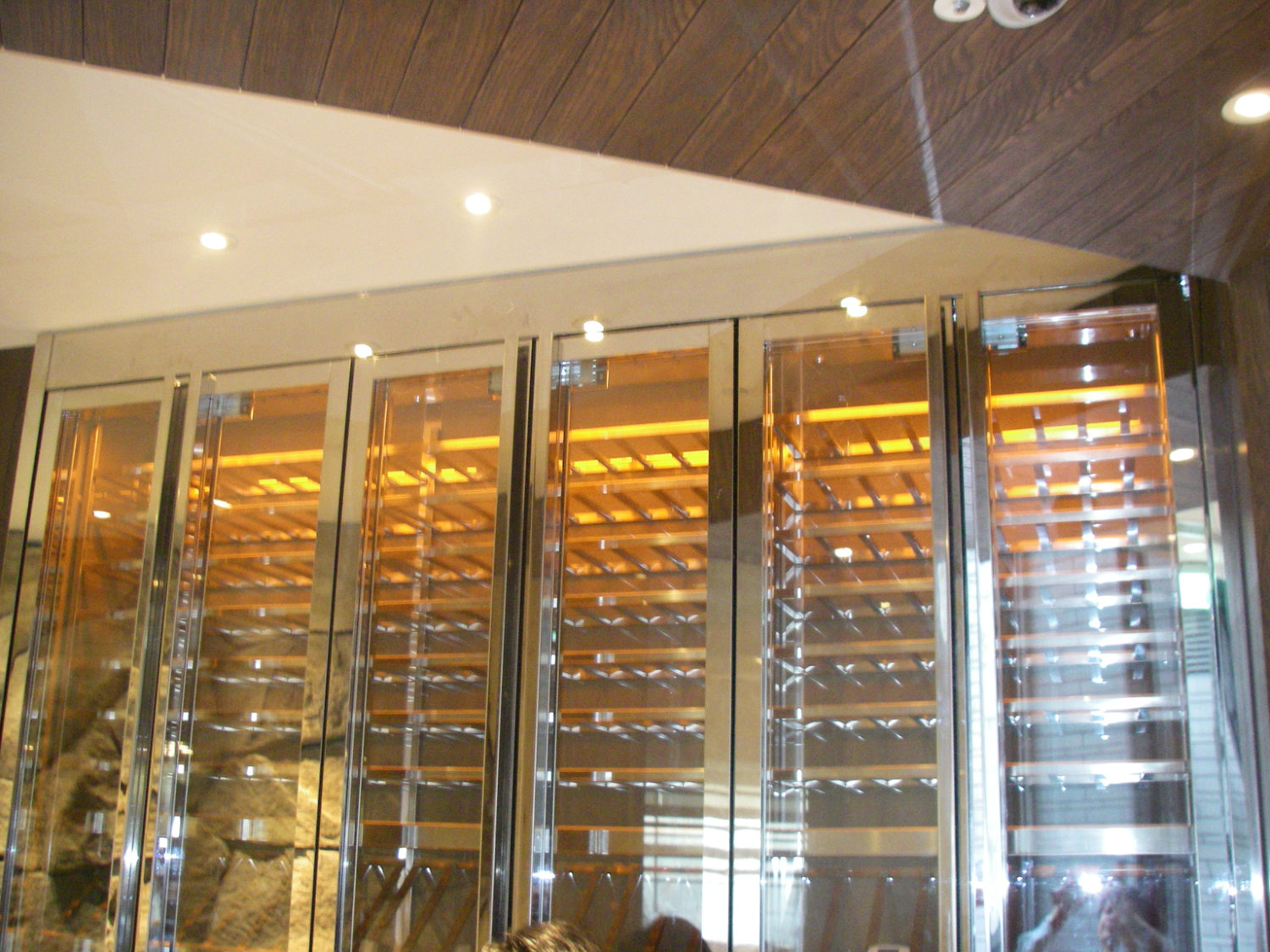
Commercial|A full wall of climate-controlled cabinetsSix climate-controlled cabinets run as a continuous wall, amber light through the glass fronts picking out the bottles. The equipment sits back into the wall line and reads as architecture.
Hospitality|Stainless steel display cabinets
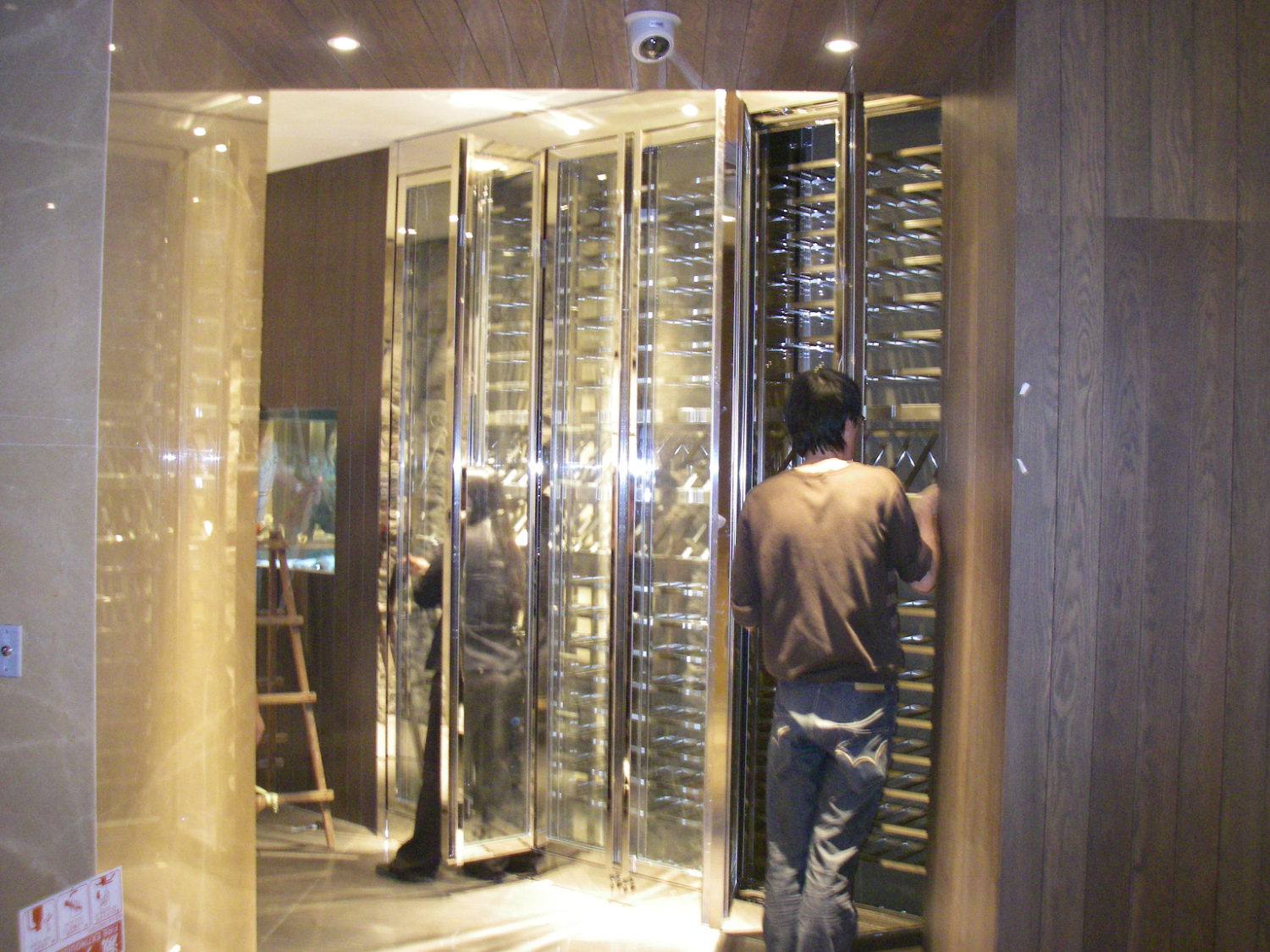
Hospitality|Stainless steel display cabinetsStainless-framed glass doors set against a timber ceiling with integrated lighting. The open service line means fetching a bottle in front of the guest becomes part of the experience.
On site|Delivery and installation
On site|Delivery and installationInstallation day. Levelling, ventilation clearance, power and drainage all have to be right at this stage; correcting any of it after completion costs a great deal more.
Private cellar|Timber racking under construction
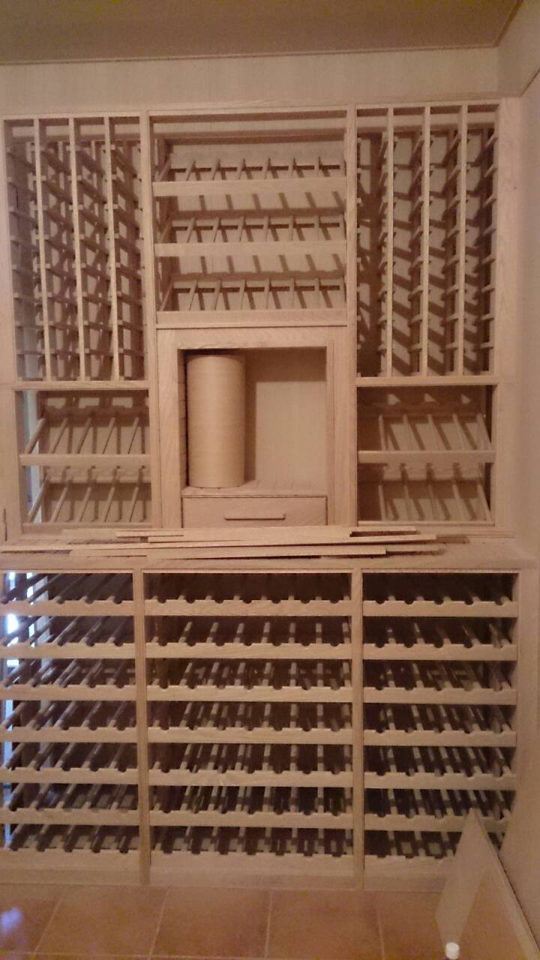
Private cellar|Timber racking under constructionBin shelving above, display rows in the middle, high-density storage below — one wall serving three different ways of reaching for a bottle. The circular opening at centre is left for the climate unit.
Private cellar|Completed
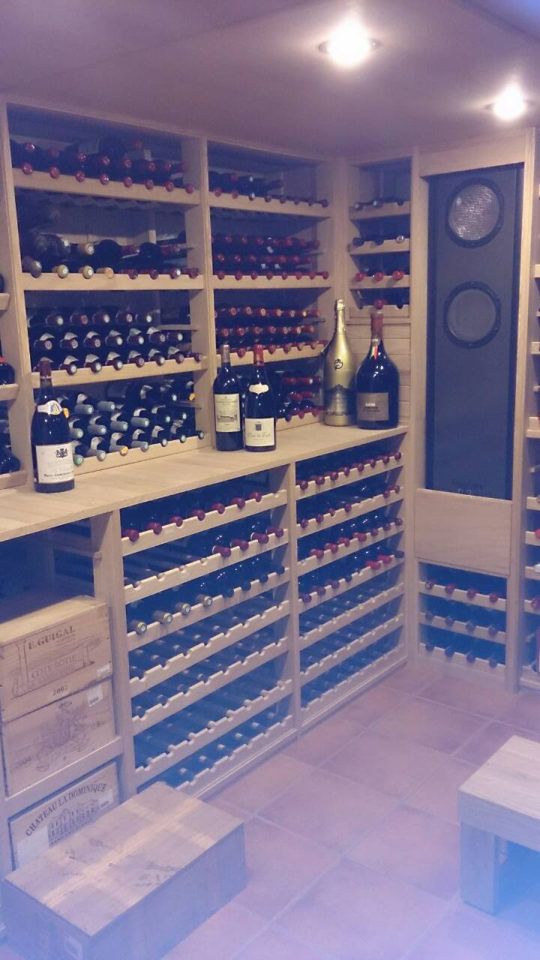
Private cellar|CompletedThe same cellar once filled. The dark panel to the right is a EuroCave INOA conditioning unit, given a speaker-cabinet form and set into the joinery so that it all but disappears in use.
Private cellar|Angled display shelving
Private cellar|Angled display shelvingAngled shelves present the label face-on, so finding a bottle no longer means pulling out a dozen to check. For a large collection, it is a decision the owner appreciates daily.
Let Us Talk

Talk it through first.
Decide afterwards.

A faulty cabinet, a cellar you are considering, or simply a question of feasibility —
get in touch. Assessment and advice are free.

Describe your requirement